I thought I knew the story of King Arthur and his knights of the round table, but I had never read Le Morte d’Arthur.
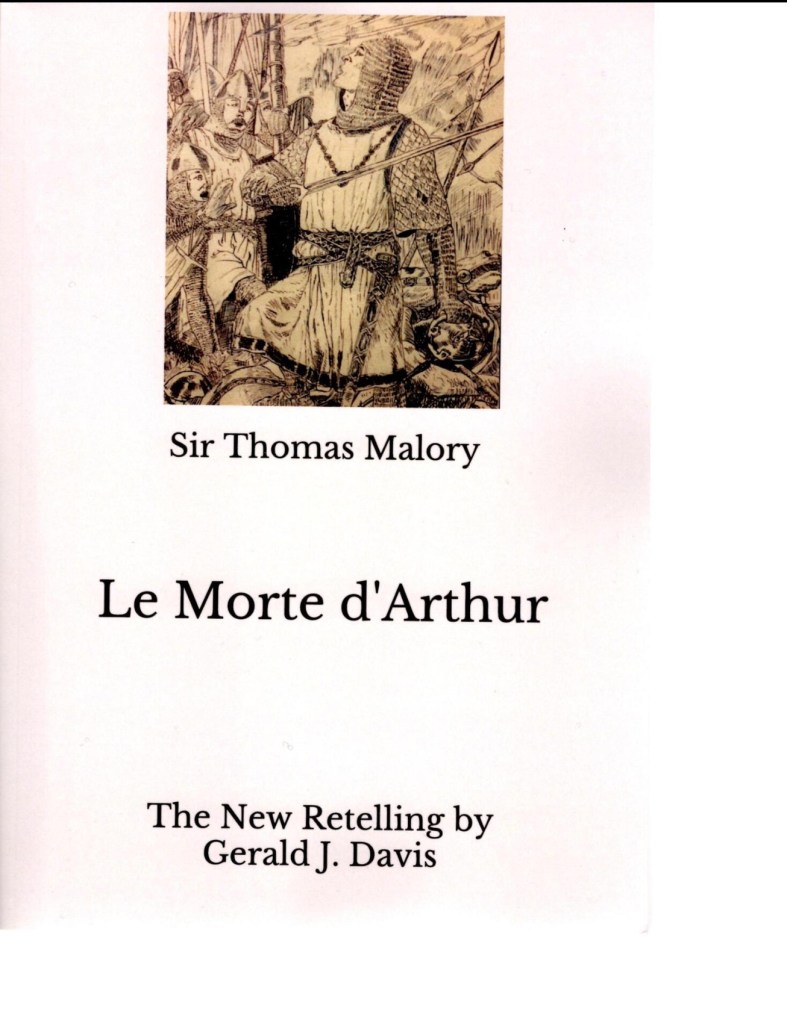
I was not prepared for the writing style. It felt a little like reading the Bible. That’s not a bad thing, but it’s not what I consider easy reading. I don’t necessarily need to know which knight knocked another knight off his horse, and who noticed and knocked a different knight off his horse to give it to the first horseless knight. It was like a weird way of counting sheep to fall asleep.
After the first book, I thought I had found a rhythm and would breeze through the rest of the book. What I didn’t prepare myself for was the lineage of Sir Tor. His father was King Pellinore, who raped a virgin, the result of which was Sir Tor. Somehow this is less horrific in King Arthur’s mind, because he describes the rapist as “a good man.”
And I know, I know. This is just a sign of the times when it was written, but I am loath to think everything is fine when knights are taking women against their will, or wives are cheating on husbands. It offends my moral compass, even if it makes for timeless tales of unrequited love.
I think my favorite character in the entire book is Sir Tristan. He is faithful to his love, even though he allowed her to marry his uncle due to undeserved loyalty. He does not take advantage of other knights. He is what I always thought all of King Arthur’s knights strove to be.
This doesn’t go into the realm of my all time favorite books, but I’m glad I read it. I’m glad I know how King Arthur died and what happened to all of the knights of the Round Table. I still wonder if the last followers of Sir Lancelot were the founders of the Knights of Templar, but maybe that’s another story.

 Kristie's Craziness
Leave a comment